Tooth loss affects millions of individuals worldwide and can occur for a variety of reasons, including advanced tooth decay, periodontal disease, trauma, or genetic factors. Whether a single tooth or multiple teeth are missing, the impact on oral health, appearance, and self-confidence can be significant. Missing teeth can lead to difficulties in chewing and speaking, shifting of adjacent teeth, and even bone loss in the jaw over time. Fortunately, modern dentistry offers a range of effective and reliable solutions for replacing missing teeth, allowing patients to restore function and regain a natural-looking smile.
Dental Implants
Dental implants are widely regarded as the most advanced and long-lasting solution for replacing missing teeth. An implant is a small titanium post surgically inserted into the jawbone to act as an artificial tooth root. Once the implant integrates with the bone through a process called osseointegration, it provides a stable foundation for a crown, bridge, or denture.
Implants offer several benefits: they look and function like natural teeth, help preserve bone density by stimulating the jawbone, and do not require alteration of surrounding healthy teeth. They are highly durable and, with proper care, can last for decades. Implant treatment can range from replacing a single tooth to supporting full-arch restorations. However, patients must have sufficient bone volume and good oral health, and in some cases, additional procedures such as bone grafting may be necessary.
Fixed Dental Bridges
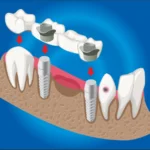
Fixed bridges are another common method of replacing one or more missing teeth. A bridge consists of an artificial tooth (or teeth) called a pontic that is anchored to adjacent natural teeth or implants. Traditional bridges typically involve preparing the teeth on either side of the gap to receive crowns, which then support the pontic.
Dental bridges restore the appearance and function of the teeth while preventing the shifting of adjacent teeth into the empty space. They are less invasive and generally more affordable than implants, making them a suitable option for many patients. However, unlike implants, bridges do not prevent bone loss in the area of the missing tooth, and the preparation of adjacent teeth can compromise their structure if they are otherwise healthy.
Removable Partial Dentures
Removable partial dentures (RPDs) are custom-made prosthetic appliances used to replace multiple missing teeth in the same arch. They consist of a metal or acrylic framework that holds artificial teeth and is designed to fit comfortably around the remaining natural teeth. Clasps or precision attachments provide retention and stability.
RPDs are a cost-effective and non-surgical option for tooth replacement and can be fabricated relatively quickly. They help restore chewing function and aesthetics, and they are easy to adjust or modify over time. However, because they are removable, they may not offer the same level of stability or comfort as fixed options. Some patients may require a short adjustment period to get used to wearing them.
Complete Dentures
Complete dentures are used when all teeth in an arch (upper, lower, or both) are missing. These removable appliances rest on the gums and are custom-designed to resemble the appearance and function of natural teeth. Advances in materials and fabrication techniques have significantly improved the comfort and fit of modern dentures.
Although conventional dentures can restore basic function and aesthetics, they often require adhesives to remain in place, particularly in the lower arch, where bone loss can reduce stability. Over time, changes in jawbone structure can affect the fit, requiring relining or replacement. For patients seeking greater retention, implant-supported options may be more suitable.
Implant-Supported Dentures and Bridges
Implant-supported dentures and bridges combine the benefits of dental implants with the functionality of traditional prosthetics. These restorations are secured to strategically placed dental implants, providing increased stability, improved function, and greater comfort. In the case of an implant-supported bridge, two or more implants support multiple artificial teeth, without the need to involve adjacent natural teeth.
For patients who are edentulous or missing many teeth, implant-retained dentures offer a significant improvement over traditional removable dentures. They reduce slipping and discomfort, allow for better chewing efficiency, and help preserve jawbone integrity. Depending on the case, the prosthesis may be fixed (non-removable) or removable for cleaning.
Choosing the Right Option
Every patient presents with unique dental, functional, and anatomical considerations, so the right tooth replacement option depends on several factors. These include the number of missing teeth, the condition of adjacent teeth, the amount and quality of available bone, general and oral health, budget, and personal preferences. During a comprehensive consultation, the dental team will assess these variables and develop a personalized treatment plan to restore the patient’s smile and function using the most appropriate restorative method.