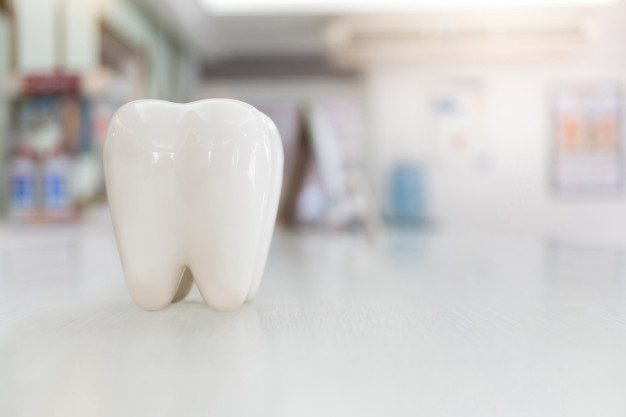
A dental crown is a restorative covering that is placed over a tooth or dental implant. It can be made from a variety of materials – commonly porcelain, resin, and metals – in a dental laboratory. Dental crowns can serve many purposes, including restoring the tooth’s structure and strength and improving the appearance of the tooth. Here are 4 signs you may need a dental crown.
1. YOU NEED A ROOT CANAL.
A root canal becomes necessary when a tooth has become very decayed or infected. If your dentist tells you that you need a root canal, you can almost certainly expect to get a crown afterward.
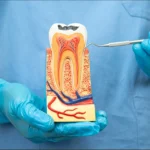
During the root canal procedure, the pulp and nerve inside the tooth are removed. Teeth that need root canals are often weak and susceptible, which is why a crown is placed after the procedure. The crown restores the tooth’s strength and function.
2. YOUR TOOTH IS IN DANGER OF BREAKING.
When a tooth’s structure is at risk, decay is often the culprit. A tooth can become decayed to the point that a filling will not be enough to restore the tooth’s strength. In this situation, a crown will be placed to protect the tooth. Crowns can also be used if the patient is getting a large filling that will compromise the tooth’s strength.
A cracked tooth can become sensitive and painful, and it can potentially allow decay to develop. For fragile teeth, starting to crack, and/or in danger of breaking off completely, a crown can be used to make the tooth stronger and maintain its function.
3. YOU WANT TO IMPROVE THE APPEARANCE OF A TOOTH.
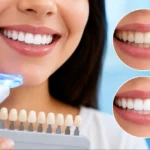
Teeth that are too small, damaged, or discolored can be covered with crowns to improve the appearance of the tooth. Modern crowns can be made using natural-looking materials, such as porcelain or composite resin.
A crown can also be used to disguise an old, unattractive filling.
4. YOU ARE GETTING DENTAL IMPLANTS.
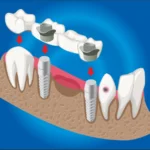
Dental implants are replacements for missing tooth roots, and crowns are replacements for missing teeth. A dental implant is placed into the jawbone, and the crown is placed on top of the implant to enable the patient to chew normally. Patients who get dental implants will have crowns placed as part of the permanent restoration.
Crown restorations are one of the most common dental procedures dentists perform. Every day, thousands of people have crowns placed to fix all kinds of tooth and mouth problems. Despite how common the procedure is, however, dental crowns are sometimes not very well understood. Some people are intimidated or frightened by the prospect of having a crown restoration.
Dental crowns are nothing to be intimidated by. Not only are they vitally important, they’re also not scary at all. The dental crown procedure is logical and straight-forward. More importantly, dental crowns themselves perform very important functions for tooth and mouth health. Here’s everything you should know about crowns, and why you shouldn’t be afraid if you need to have one.
WHAT ARE DENTAL CROWNS?
Dental crowns are fixed prosthetic restorations made to restore a damaged tooth to its original shape and size. They’re permanently cemented on teeth that have cracked, extensively decayed, or otherwise been damaged. Although they sometimes extend down onto the root surface, crowns essentially replace the outer aspect of the “crown” part of a natural tooth, so it makes sense that the restorations are called “crowns.”
When affixed, the crown fully encases the portion of the damaged tooth that sits above the gum line. Crowns are custom made to fit over each tooth. They can be made of a variety of different materials, including ceramics, porcelain-and-metal, gold, or resin.
HOW DO DENTAL CROWNS WORK?
Crowns fit on teeth much the same way sewing thimbles fit on fingertips – they fit over the top of a tooth and protect what’s underneath it. They’re cemented in place and, once affixed, act as a new top for the tooth while holding it together and keeping it from breaking apart.
Crowns are constructed of very resilient and durable materials. They’re designed to endure the traumas of chewing just as effectively as the rest of your teeth. Think of a crown as a cover for the top (visible) portion of your tooth. After the dentist cements the crown to your damaged tooth, it essentially becomes a part of that tooth.
HOW ARE DENTAL CROWNS INSTALLED?
First, your dentist will apply anesthetic to numb the tooth getting the crown and the surrounding gum tissue. Then, they’ll use a dental drill and an abrasive bur to remove the outer surface of the tooth on the top and all sides, creating enough room for the crown to be placed. If there’s not enough of the tooth left to support the crown, they may first add a crown buildup to create a sound foundation on which the crown would sit. The dentist will then make an impression of the tooth using dental impression paste, putty, or a digital scanner. They send this impression to a dental laboratory to make the crown.
It usually takes about two to three weeks to get the crown back from the dental laboratory after the dentist sends them the impression. It’s not good for the tooth to leave it uncovered over that time, so your dentist will install a temporary crown during your initial visit. When the permanent crown arrives back at the Signature Smile office, you’ll have a second appointment with the dentist to install it. The temporary crown will be removed and the new crown will be adjusted to properly fit your tooth and bite. Dentists then use a special cement to affix the crown to the tooth. When the cement cures, the crown is firmly attached to the tooth.
WHY DO DENTAL CROWNS HELP?
Crowns restore the shape, strength, functionality, and appearance of a damaged tooth. After you have one placed, you’ll be able to use your tooth to chew again without risking damage to what’s underneath it. Crowns protect the vulnerable part of the tooth by physically holding it together and shielding it from damage.
Crowns are also important to restoring and maintaining the structural integrity of your mouth and bite. When a tooth decays or breaks, it leaves a gap. That gap can create further problems when it interferes with your bite or when other teeth migrate into it. By filling that gap, crowns restore your mouth’s proper structure. Last but not least, crowns also restore the appearance of your mouth, as they are mostly indistinguishable from natural teeth.
We love our patients and love to help them form healthy dental life that will last them a lifetime. For more information call us today to answer all of your questions so get an appointment.